News

Partnership project develops technology of interest to Norwegian Space Agency for use on satellite
EMPIR project improves reference gas standards for climate relevant volatile organic compounds


One of the first European Metrology Networks successfully established by support from EMPIR project
Partnership project develops metrology basis for soil moisture measurements on multiple scales


Partnership project delivering first reference materials for stable isotope ratios in seawater
EURAMET project performs a comparison of thermometer radiation shields in the Arctic


BIPM-WMO report recommends integrating metrology into the practice of climate and ocean observation
EMPIR project develops calibration methods for non-catching precipitation gauges


EMPIR project conducts calibration intercomparison for mercury concentrations in the atmosphere
Guide for the calibration of sensors for seismic, infrasound and hydroacoustic monitoring published


New videos introduce work of Biosphere project: Cosmic rays, UV radiation and the ozone shield
World Metrology Day spotlight: the European Metrology Network for Advanced Manufacturing


Call for abstracts: First CIPM Sectoral Task Group – Climate Change and Environment meeting
New Climatological Reference Station transmitting high quality data set up by EMPIR project


EMPIR project contributes to more accurate observations of ocean acidification
Partnership project makes progress towards protecting the Earth’s fragile ozone shield

EMPIR project on low-frequency sound and vibration raises awareness at major conference
SHIPAS satellite-based climate sensor approved for in-orbit testing


Isotope metrology to enable climate action and regulation
EMPIR climate project holds successful workshops and prepares for future report


Workshop and training course on new transfer standards for spectral irradiance
Standardising long-term remote sensing and in situ measurements of atmospheric halogenated VOCs

Researching effects of cosmic radiation on the Earth’s biosphere
Stakeholders help NEWSTAND team refine options for new spectral irradiance measurement standards
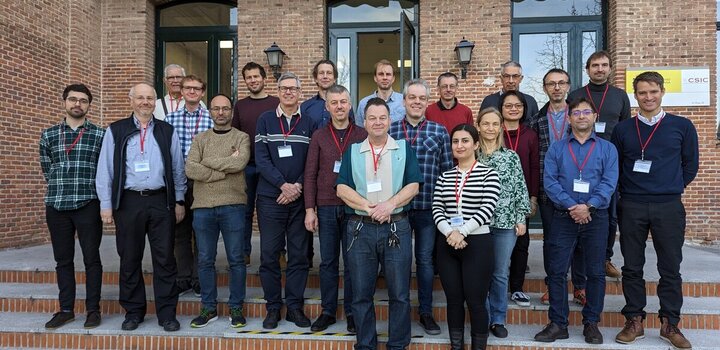

Unleashing the power of satellite remote sensing for climate action
Analysis of ocean variable measurement practice finds measurement uncertainty often misunderstood


Measures to clear the air
Contribution of the MetClimVOC Project to the Strategic Research Agenda of the EMN


Online stakeholder workshop for the Partnership project NEWSTAND on 22 November 2023
MINKE call offers researchers free high-quality oceanographic metrological support facilities


A metrologist at sea
Metrology: the foundation of trustworthy climate data
