integrated metrology community.

News
Comprehensive guide to detecting mercury in the environment publicly available
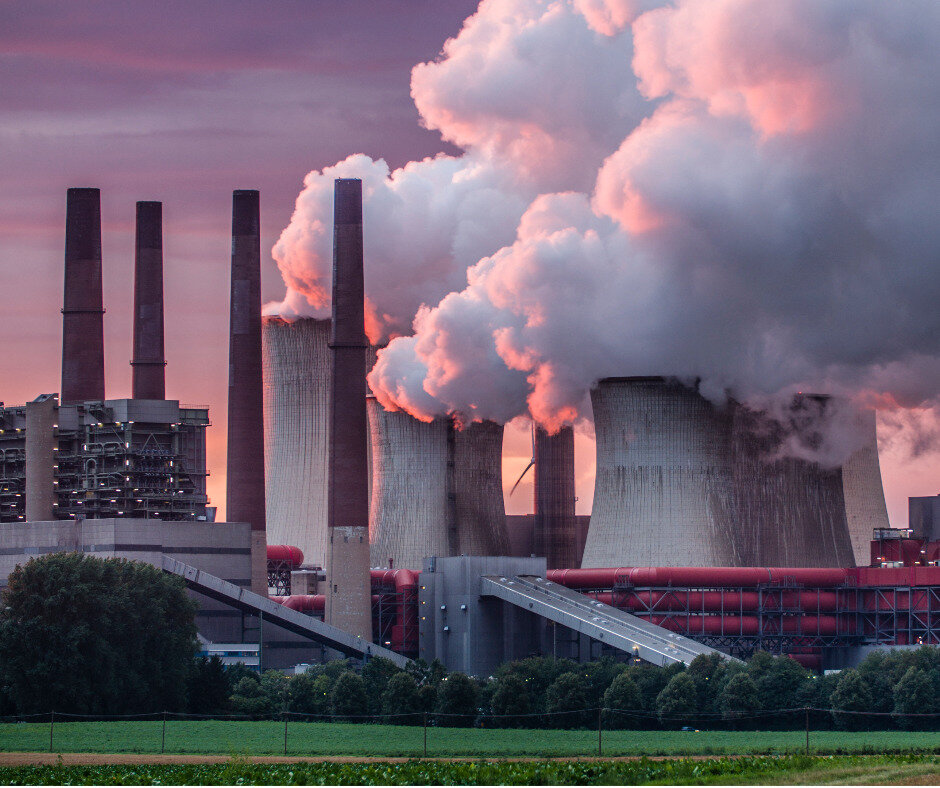
Power station chimneys
Mercury is highly toxic to humans, animals and ecosystems. Its oxidised forms are particularly harmful but prior to the work of this project lacked validated methods for detection
Mercury (Hg) is a metallic element that is toxic in all of its forms. This includes pure (elemental, Hg0), oxidized (Hg II) and particulate bound species. As such its levels are restricted by international regulations such as the Minamata convention, the Industrial Emissions Directive, the Air Quality Directive and the Waste Incineration Directive.
Mercury is also a global pollutant and the gaseous form, released from natural and anthropogenic sources such as cement production and coal burning, can become oxidised in the air to Hg (II). At extremely low levels (~1 ng/m3) this can be transmitted via atmospheric routes to settle in remote areas such as the artic or enter the aquatic environment where it can accumulate in marine life which can then be eaten and accumulate in people.
However, prior to the work of this project traceable calibration methods only existed for elemental, Hg (0), mercury.
The EMPIR project Metrology for oxidised mercury (16ENV01, MercOx) addressed this measurement gap and published a document containing eight good practice guides detailing the work of this highly successful project.
The guide provides:
The most important recommendations about traceable calibration methods for elemental and oxidized Hg in the atmosphere and stack emissions.
- Recommendations for the proper development of a certification protocol for the traceable generation of HgCl2 at μg/m3 levels for stack gas emission measurements.
- Guidelines for measurements of selectively trapped gaseous Hg(II) at environmental concentrations.
- Guidelines for biomonitoring using in situ and transplanted lichens, determination of Hg isotopic composition in lichens and mosses, long-term biomonitoring of Hg isotopic composition in the atmosphere, and the determination of Hg content and isotopic composition in particulate atmospheric and industrial emission materials.
- Detailed recommendations for strategies for total Hg and Hg species determination in activated carbon/carbon rich materials, and corresponding species conversion during Hg trapping and thermal desorption.
- Guidelines for application of gas evaporative generator for low atmospheric concentrations.
- Suggestions stack gas emission measurements based on work performed at the Marl coal-fired power plant and Salonit cement production plant.
- A good practice guide for Hg speciation in atmospheric samples.
To generate these recommendations and guidelines the project consortium performed a tremendous amount of work including the development of new calibration techniques and detection methods, new reference materials, performed field tests, developed a new Hg radiotracer approach and a novel, efficient low-cost nanomaterial to selectively trap Hg(II).
As well as this the project also inputted into standardisation bodies CEN/TC 264 Air quality Working Groups 8, 9 & 10 and ISO/TC 146 Air Quality WG32 and into normative documents such as EN 13211, EN 14884, WI 264161, CD 21741 and ISO/DIS 21741n.
The MercOx project also directly contributed to the activities within GEO Global Observation System for mercury (GOS4M) and thus the Effectiveness Evaluation of the Minamata Convention (Article 22) as well as the UNEP’s partnership programme.
Finally, the project has provided input to 2 new metrological projects: (i) Horizon2020 EU funded MSCA ITN GMOS-Train: “Global Mercury Observation and Training network in support to the Minamata Convention”, and the EMPIR project Metrology for traceable protocols for elemental and oxidised mercury concentrations (19NRM03, SI-Hg).
The work from the MercOx project has provided crucial support to the enforcement of current and future global and European regulations governing mercury pollution, and the protection of human health and the environment.
This EMPIR project is co-funded by the European Union's Horizon 2020 research and innovation programme and the EMPIR Participating States.
Want to hear more about EURAMET?
Sign up for EURAMET newsletters and other information
Follow us on LinkedIn and Twitter
Information
- EMPIR,
- EMN Climate and Ocean Observation,
- EMN Pollution Monitoring,
- Environment,
- TC-MC,

Enabling production of more reliable data and more rigorous assessments of climate change and variability more
The Spanish National Metrology Institute is an active member of the European Metrology Network (EMN) for Energy Gases more
Advancing the large-scale energy storage which is required for a shift to renewable energy supply more

Lowering measurement uncertainty and improving SI-traceability more

Stage 1 of the 2026 Call under the European Partnership on Metrology is open to submit potential research ideas more