integrated metrology community.

News
EMPIR project builds liquid density measurement capabilities
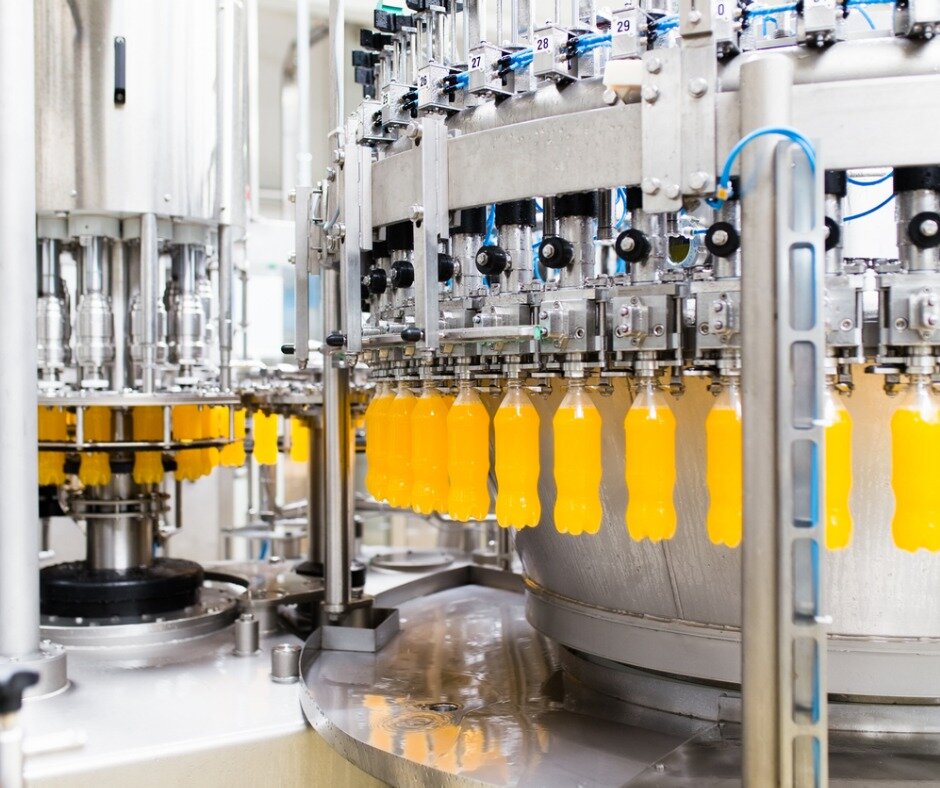
Bottling plant
Project participants increase capabilities for high accuracy measurement of liquid density in order to support compliance with EU Directives
EMPIR project Establishing traceability for liquid density measurements (17RPT02, rhoLiq) is working to build the technical capacity of participants in order to deliver high accuracy measurement of liquid density for industrial users. For a range of sectors including food and pharmaceuticals, liquid products are often quantified by mass or volume; since liquid density is directly related to those two quantities, it is itself a key parameter. The availability of more accurate density measurement will facilitate manufacturers’ compliance with EU Directives and national laws, as well as making their products more competitive.
A key aspect of this type of EMPIR project, called a Capacity Building project, is to build technical capacity in this case with the aim of delivering high accuracy measurement of liquid density for industrial users. Three National Metrology Institutes (BEV, GUM and PTB) with a wealth of of experience in this area worked with eight institutes (IPQ, CMI, DMDM, IMBiH, INM-MD, INM-RO, JV, UME) to help them to build their technical capability.
Achievements from the project so far include three measurement comparisons whose results will form the basis of calibration good practice guides, to be published before the project ends in 2021, and which will also feed into the revision of international standards.
The three measurement comparisons were:
- Two diagnostic density measurement comparisons of Newtonian liquids, one by means of hydrostatic weighing (with 10 participants), and other by means of oscillation-type density meters (with 12 participants). The results from this comparison will support the characterisation of these liquid density measurement methods and will be the basis of further improvements of the methods in order to achieve the target uncertainty.
- Seven partners took part in the first density measurement comparison by using viscoelastic liquids samples by means of oscillation-type density meters. The results of this comparison information regarding the robustness of these instruments when measuring viscoelastic samples, with special regard to the damping effect caused in the oscillation. This knowledge can be further used to predict and correct possible density deviations. Results from the project were presented at two international conferences:
- 'Density measurements of viscoelastic samples with oscillation type density meters' was presented at the IMEKO TC1-TC7-TC13-TC18 Symposium 2019
- ‘Robustness studies of oscillation density meters with viscoelastic fluids’ was presented at the 19th International Metrology Congress
In addition, a paper entitled 'Establishing traceability for liquid density measurements in Europe: 17RPT02-rhoLiq a new EMPIR joint research project', was published in the prestigious Journal of Physics.
This EMPIR project is co-funded by the European Union's Horizon 2020 research and innovation programme and the EMPIR Participating States.
Want to hear more about EURAMET?
Sign up for EURAMET newsletters and other information
Follow us on LinkedIn and Twitter
Information
- EMPIR,
- Research Potential,
- Capacity Building,

Developing a metrologically-based field assessment of glare and obtrusive light more
Standardising industrial procedures for the magnetic properties of devices leading to the improved quality of a wide variety of products more
Implementing quantum-based pressure measurement techniques in European industries more

Developing reference materials for mass spectroscopy to monitor radioactive and stable isotope pollution in the environment more

Development of the metrological network needed to realise and implement 6G technology more