integrated metrology community.

News
EMPIR project developed primary standard for hydrogen flow meters
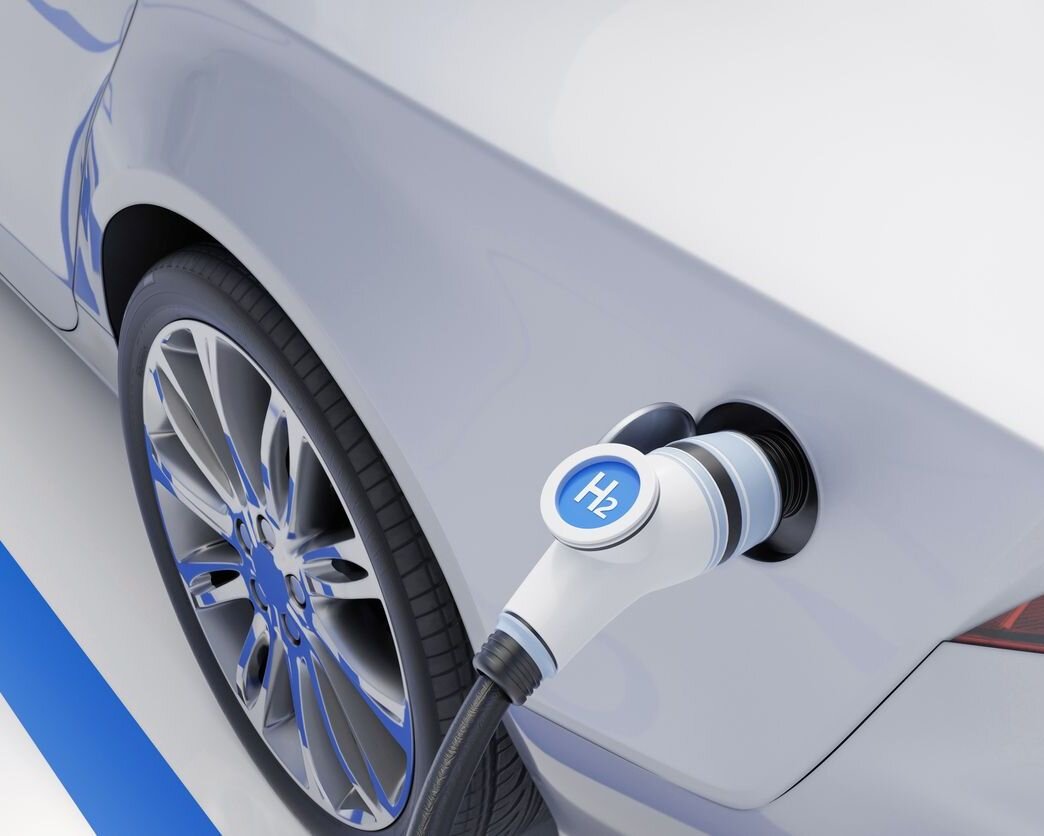
Hydrogen fuel car charging station
Across Europe, there are now four installations of the primary standard for hydrogen flow meters that are used in hydrogen refuelling stations
As part of the European Green Deal, the European Union aims to be carbon neutral by 2050 to support the transition towards a modern and resource-efficient economy. Greenhouse gases, such as carbon dioxide or methane, are key driver of climate change and about a quarter of the EU’s greenhouse gas emissions are attributed to transport.
Therefore, it is essential to move towards climate-neutral alternatives and away from conventional fossil-fuel-powered vehicles. Completed EMPIR project Metrology for hydrogen vehicles 2 (19ENG04, MetroHyVe 2) developed part of the necessary infrastructure to support the implementation of hydrogen fuel cells electrical vehicles. This included developing the metrological network needed for using hydrogen dispensing meters at hydrogen refuelling stations, preparing quality control and sampling methodologies as well as performing fuel cell stack testing. This is building on the work of the earlier EMPIR project Metrology for hydrogen vehicles (16ENG01, MetroHyVe).
Development of new primary standard for hydrogen flow meters and hydrogen sampling references
This project focused on developing the underlying metrological network to support the increased uptake of hydrogen fuel cells. As part of this objective, the project has established more than four primary standard installations across Europe, that support the calibration of hydrogen flow meters according to the Society of Automotive Engineers (SAE) J2601 protocol. These meters are an essential part of hydrogen refuelling stations for billing the vehicles users and the mobile flow meter primary standards for verifying them are stationed at METAS, CESAME, NEL and JV.
Additionally, the project published two peer-reviewed article ‘Strategies for the sampling of hydrogen at refuelling stations for purity assessment’ and ‘Review of sampling and analysis of particulate matter in hydrogen fuel’ which form the reference for hydrogen gas and particulate sampling. Representative sampling of hydrogen is important to ensure the purity of hydrogen fuel is sufficient, however inappropriate sampling strategies might enhance contaminates or hide them.
MetroHyVe 2 studied the behaviour over time of reactive compounds in 10 different hydrogen sampling cylinders providing information on time to perform analysis after sampling. Additionally, new sampling strategies were developed for hydrogen refuelling stations and for fuel cell electrical vehicles. Additionally, hydrogen sampling inter-comparisons were conducted for the first time internationally that also identified differences between approaches, which will feed into the Clean Hydrogen Partnership project HyQuality Europe.
Hydrogen sampling is also essential for heavy-duty transport and the data was shared with the follow-on project Metrology to support standardisation of hydrogen fuel sampling for heavy duty hydrogen transport (22NRM03, MetHyTrucks) to support the development of the necessary infrastructure for using hydrogen-powered trucks. Overall, these findings will support harmonised guidelines for hydrogen fuel sampling and support international standards such as ISO 19880-9:2024 Gaseous hydrogen — Fuelling stationsPart 9: Sampling for fuel quality analysis.
The project has also published the following reports and good practice guides.
Reports:
- Report on the gas calibrants available, existing gap and recommendation to bridge the gap ensuring that commercial laboratories can be compliant with ISO21087:2019
- Review of the state of the art of online gas sensors/analysers
- Review of the state of the art of gas sampling systems available and used at HRS
- Review of valves currently used on cylinders for hydrogen sampling
- Guideline report for laboratory-based validation and quality control of sensors
- Literature review of preparation techniques and cylinder treatments for preparation of formaldehyde and ammonia binary calibrants in hydrogen
- Filtration efficiency of 5 µm and 0.2 µm filters with PSL particles and hydrogen as carrier gas
- Review on current measurement procedures and protocols for FC stack measurements for road applications
Good practice guide:
- Good practice guide for representative sampling and analysis of particulate matter in hydrogen fuel dispensed from hydrogen refuelling stations
- Good practice guide for hydrogen quality sampling procedures/methods at HRS nozzles (harmonised with USA and Japan)
The project coordinator Thomas Bacquart (NPL) comments on the success of the project:
‘It has been a fantastic project with a great and innovative consortium. We have done a lot of “first” as heavy duty primary flow standard (huge system) or hydrogen sampling inter-comparison. It brought a lot of novel knowledge to the industry and challenges for us to achieve it. This consortium achieved a lot, I really thank them for it!’
This EMPIR project is co-funded by the European Union's Horizon 2020 research and innovation programme and the EMPIR Participating States.
Want to hear more about EURAMET?
Information
- EMPIR,
- Energy,
- EMN Energy Gases,
- TC-F,

Developing a metrologically-based field assessment of glare and obtrusive light more
Standardising industrial procedures for the magnetic properties of devices leading to the improved quality of a wide variety of products more
Implementing quantum-based pressure measurement techniques in European industries more

Developing reference materials for mass spectroscopy to monitor radioactive and stable isotope pollution in the environment more

Development of the metrological network needed to realise and implement 6G technology more