integrated metrology community.

News
EMPIR project improves equation of state for hydrogen-enriched gas
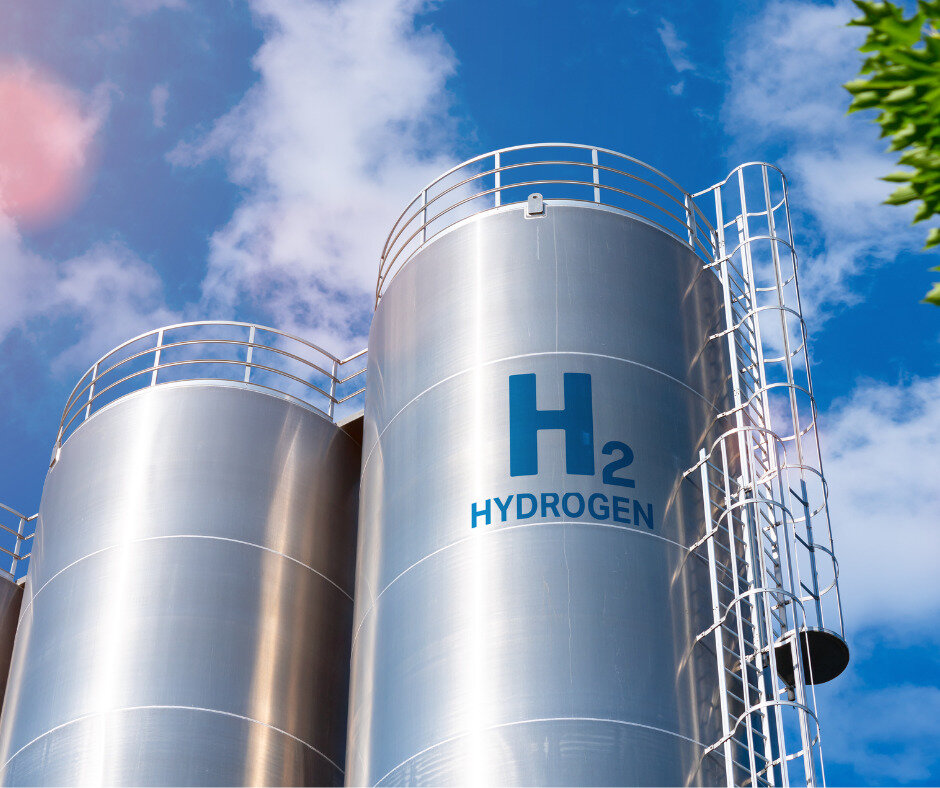
Hydrogen storage towers
Work by EMPIR project has improved understanding of hydrogen-enriched natural gas characteristics
The project
EMPIR project Metrology for Advanced Hydrogen Storage Solutions (19ENG03, MefHySto) has investigated the thermodynamic properties of hydrogen, natural gas (NG) and hydrogen-enriched natural gas (HENG).
Hydrogen offers the potential to be a key renewable zero-carbon fuel source for the future. Proton exchange membrane (PEM) electrolysis technology can be used to produce hydrogen gas from water, which can then be stored, used in hydrogen fuel cells, or mixed with existing natural gas supplies (HENG). As PEM electrolysis requires energy input to power the reaction, hydrogen gas can therefore be used as a form of energy storage. Other renewable sources, such as wind and solar, often produce a surplus which, at the moment, cannot be sufficiently stored. Hydrogen gas, therefore, could be used to respond to this variability, ‘soaking up’ excess or supplementing grids when supplies are low. However, due to this variability, stored hydrogen can experience long ‘idle’ times, during which the gas quality can degrade. A full understanding of the characteristics of hydrogen and how it behaves under various storage conditions, including within HENG, will therefore be vital for implementing hydrogen as a safe and efficient fuel source.
Equation of State
The thermodynamic properties of NG and HENG are complex and can depend on a number of transient factors, such as gas purity and absorption by external materials. An equation of state (EoS) shows the relationship between pressure, volume, and temperature for a specific substance, such as a gas in storage, and can have a huge impact on the economics and safety of the substance’s usage. GERG-2008 is recognised as the ISO standard reference for predicting the properties of natural gas mixtures (ISO 20765-2). However, its application is limited, as the composition of NG can vary considerably depending on its origins. Without addressing these limitations, the EoS cannot be used for more diverse forms of NG, such as HENG.
Work done by this project has provided experimental data on pressure, mass density and temperature to improve and extend the EoS to a new level of precision. This improvement will impact every aspect of NG and HENG usage including the design of infrastructure (such as pipes and processing equipment), storage and transport.
Other achievements
- Investigating hydrogen storage solutions
The project has investigated a number of different methods, measuring the capacity for hydrogen storage of metal hydride and cryo-adsorbent materials. Metal hydrides are a chemical storage method, holding hydrogen ions ‘within’ other molecules to be extracted later, while cryo-adsorption involves holding gas molecules on the surface of a porous solid, often activated carbon, at extremely low temperatures.
The project determined those metal hydride and cryo-adsorbent materials with the highest measurement reproducibility and has distributed them among collaborating laboratories to perform hydrogen adsorption comparison studies.
- Information exchange for geological reservoirs
Porous geological formations, such as depleted oil/gas reservoirs and excavated caverns, can be used to store hydrogen gas and are known as geological reservoirs. These reservoirs hold huge storage potential but, until now, information about existing and planned geological reservoirs has not been shared publicly.
Members of the project have compiled and evaluated the information currently available on geological reservoirs and are using this as a basis for further work investigating measurement techniques for hydrogen. Some of the characteristics being measured don’t depend on how the gas is stored but some, such as gas purity, do. Sharing information about this storage technique, which has the potential to be highly influential in the future, will be invaluable for the overall research of hydrogen storage.
Project coordinator Michael Maiwald (BAM) has said of the project:
“Renewable energy sources fluctuate significantly and large-scale hydrogen storage is the most promising solution to avoid interruptions in energy supply. MefHySto provides reliable standards, reference methods and materials needed for the required advanced storage types.”
This EMPIR project is co-funded by the European Union's Horizon 2020 research and innovation programme and the EMPIR Participating States.
Want to hear more about EURAMET?
Information
- EMPIR,
- Energy,
- EMN Energy Gases,

Developing a metrologically-based field assessment of glare and obtrusive light more

Standardising industrial procedures for the magnetic properties of devices leading to the improved quality of a wide variety of products more

Implementing quantum-based pressure measurement techniques in European industries more

Developing reference materials for mass spectroscopy to monitor radioactive and stable isotope pollution in the environment more

Development of the metrological network needed to realise and implement 6G technology more