integrated metrology community.

News
Metrology Partnership project adapts equipment for heavy duty hydrogen refuelling stations
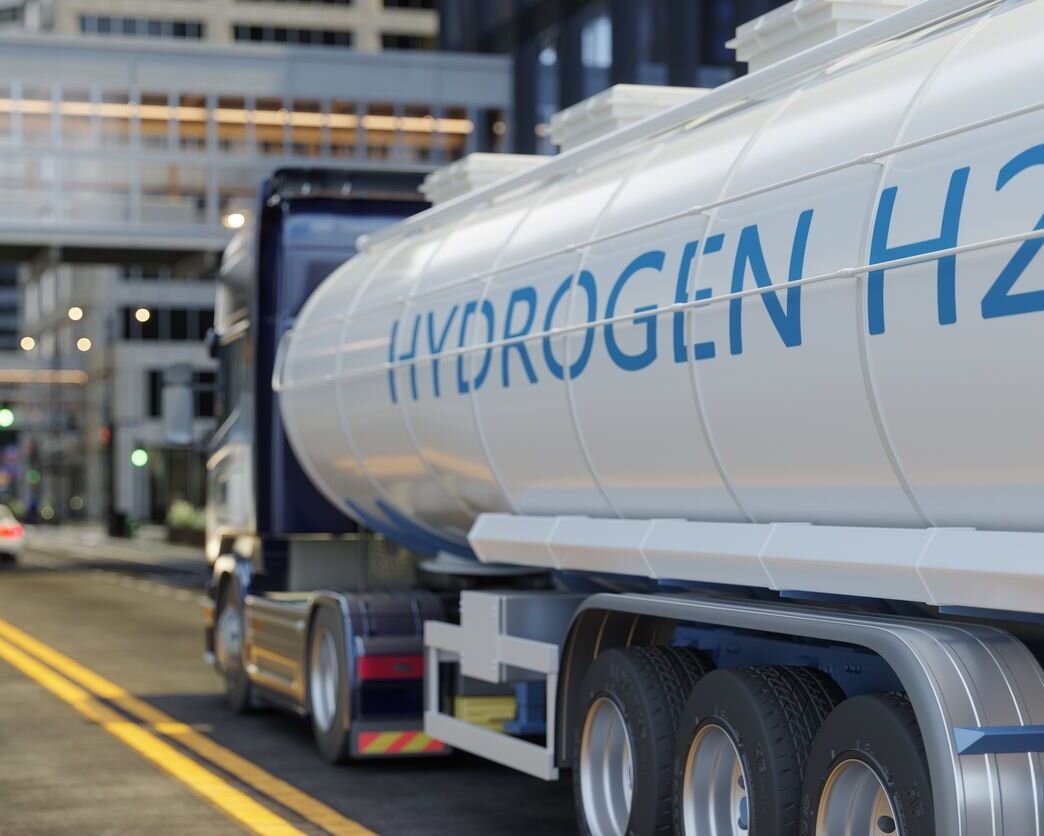
Rear View Of Hydrogen Transport Truck On The Road
Hydrogen refuelling station sampling systems were adapted for heavy-duty use to support the employment of hydrogen powered trucks across Europe
As part of the European Green Deal the EU has pledged to have no net emissions of greenhouse gases by 2050. In 2020, 24% of the EU’s total emissions of carbon dioxide (CO2), one of the main greenhouse gases, was caused by road transport. Sustainable transport options are needed to reach the European Green Deal objectives and reduce CO2 emissions.
The Metrology Partnership project Metrology to support standardisation of hydrogen fuel sampling for heavy duty hydrogen transport (22NRM03, MetHyTrucks) is developing the underlying metrological framework to increase the use of hydrogen fuel cells for heavy-duty road transport.
This project is building on the EMPIR projects Metrology for hydrogen vehicles (16ENG01, MetroHyVe) and Metrology for hydrogen vehicles 2 (19ENG04, MetroHyVe 2), which mostly focused on developing the technologies needed to use hydrogen fuel cells in light-duty vehicles. However, by 2030 approximately 60,000 hydrogen powered trucks will be used across Europe which require an extensive infrastructure of hydrogen refuelling stations for heavy-duty vehicles.
Project partners have adapted three light-duty sampling devices for heavy-duty conditions and started trialling the devices in the field. This work will support the future development of heavy-duty sampling systems and provide guidance on the metrological testing and validation needed for heavy-duty hydrogen refuelling station sampling systems.
ENGIE device
ENGIE is a French engineering company and project partner for MetHy Trucks. The ENGIE device was easily adapted for heavy-duty use by fitting a receptacle compatible with a 350 bar HDV nozzle since the device was originally qualified for pressure of up to 875 bar and the tank and valves supported a flow rate of up to 120 g/s. However, the ENGIE device requires the temperature of the hydrogen fuel to be between -40 to +80 °C. For the refuelling process, hydrogen must be cooled down to -40 °C to prevent overheating in the vehicle so ideally hydrogen sampling occurs at a similar temperature.
Hy-SaM device
The Hy-SaM device was developed by Zentrum für BrennstoffzellenTechnik (ZBT) and is a parallel sampling system that has been adapted for heavy-duty use by fitting a new high flow line, which has a flow rate of up to 120 g/s, and a receptacle and a high flow nozzle for sampling at 350 bar. Hy-SaM functions at minimum hydrogen temperatures of -20°C and can be used to fill up to three sample cylinders simultaneously during a fuelling.
DirSam device
The NPL Hydrogen direct sampling apparatus (DirSam) was developed to follow a direct sampling strategy according to ASTM D7606-17. The device can be used under heavy-duty conditions and is able to supply hydrogen at 350 and 700 bar, with a flow rate suitable for heavy-duty use of up to 120 g/s.
Additionally, the project consortium published the following reports:
- Selection of hydrogen sampling strategies for HD-HRS
- Review of the current sampling systems that are used for the quality control sampling of hydrogen at HD-HRS
- Review of the safety and venting requirements for the different hydrogen sampling strategies (direct, parallel)
- Review of existing protocols and guidelines related to the validation of the hydrogen sampling systems that are used for off-line quality control at HRS.
- Literature review of the methodologies used for assessing the representativeness of sampling for both gaseous species and particulates at HD HRS
- Review to identify the current refuelling protocol specifications and operational parameters that are in place at HD-HRS and questionnaire to investigate the potential evolution of HD-HRS
- Literature review of material compatibility studies undertaken in previous projects and their experimental conditions
Further information can be found on the MeHyTrucks project website and on the MetHyTrucks LinkedIn page.
The project coordinator Karine Arrhenius (RISE) comments on the early success of the project:
‘Hydrogen buses and heavy-duty vehicles improve air quality and provide health benefits. Sampling systems for HD-HRS are urgently needed. Without them, standardisation documents for HD-HRS applications cannot be progressed. They are a key tool for the hydrogen quality assessment chain.’
This Metrology Partnership project has received funding from the European Partnership on Metrology, co-financed by the European Union Horizon Europe Research and Innovation Programme and from the Participating States.
Want to hear more about EURAMET?
Sign up for EURAMET newsletters and other information
Follow us on LinkedIn and X/Twitter
Information
- European Partnership on Metrology,
- EMN Energy Gases,
- TC-F,

Developing a metrologically-based field assessment of glare and obtrusive light more
Standardising industrial procedures for the magnetic properties of devices leading to the improved quality of a wide variety of products more
Implementing quantum-based pressure measurement techniques in European industries more

Developing reference materials for mass spectroscopy to monitor radioactive and stable isotope pollution in the environment more

Development of the metrological network needed to realise and implement 6G technology more