integrated metrology community.

News
New open-source console developed for low-field magnetic resonance imaging
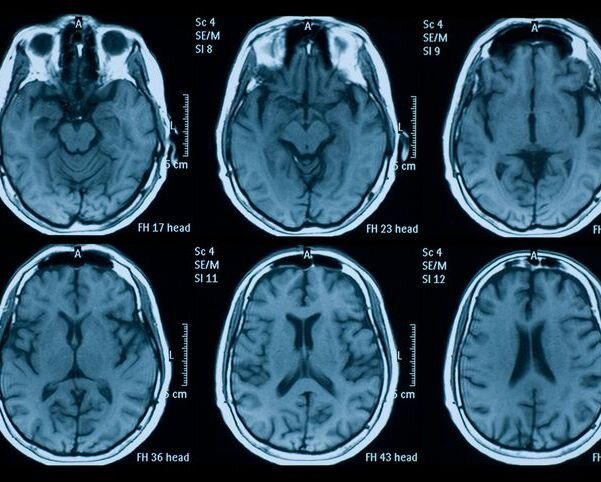
MRI scan of the brain
Extending accessibility to low-cost medical imaging in Europe
Around 40 million magnetic resonance imaging (MRI) scans are performed in the EU each year. The number of examinations is unevenly distributed among the member states, to such an extent that the number of MR scans per million inhabitants is 26 times smaller in Cyprus compared with Germany, while in many non-EU countries MRI is not available at all. Additionally, patients including those from critical care units, must be transported to stationary installed MRI systems to receive an MRI scan which represents significant personnel effort and a high risk for patients.
Low-field MRI offers the potential for greater access to the most critical diagnostic technology in in manifold ways. Portable scanners open the possibility of scans in the patient’s home or in intensive care units at the patient’s bedside. Despite low-field scanners being more affordable than their high-field counterparts, proprietary low-field MRI units are still relatively costly to purchase, operate and maintain. This prevents most hospitals, doctors’ offices, research institutions, metrology institutes and companies from purchasing or using these scanners to advance healthcare, science, and technology. Low-field MR scanners based on open-source hardware designs operated by open-source software will change this paradigm. They allow widespread adoption of cost-effective MRI scanners, developed and validated by an interdisciplinary and international community of experts.
First prototypes demonstrated a truly affordable (< 50 k€ material cost) alternative with image quality comparable to commercially available scanners. To scale these low-field MRI innovations and increase use, a metrological framework to support and boost the development and application of affordable open-source low-field MR systems is needed.
Metrology Partnership project Affordable low-field MRI reference system (22HLT02, A4IM) is working to establish the necessary metrological framework for the harmonised development of clinical low-field MRI to facilitate greater access to this technology and ensure reliable and reproducible diagnostic information for patients in the EU and worldwide.
Open-Source MR Console
A new open-source console has been developed, targeting low-field MRI systems. The console can be used for the acquisition of MR data and is easily extendable with additional auxiliary sensors. Data from the auxiliary sensor can be used to improve the image quality obtained. The performance of the developed console is comparable to other commercially available consoles, but at lower cost and fully transparent.
This work was published in Magnetic Resonance in Medicine, one of the most important journals in the field of MRI for medical applications.
Project coordinator Christoph Kolbitsch from PTB said ‘This console is an important step to be able to utilise the full potential of open-source MRI. The flexibility of the console ensures it can be used with the low-field MR scanner developed within A4IM but is also easily adaptable to other hardware.’
From research to industry adoption
The research presented is also of interest to industry. The MR console was rebuilt by MRI manufacturers and is used in their respective product developments, with PTB providing consultation services. It is a high-performance, low-cost and fully accessible alternative to other commercially available solutions. These companies also contribute code to the public open-source repositories showcasing a good example of how open source resources enable straightforward collaboration between public research institutions and industrial partners, fostering innovation that serves both scientific progress, economic interests and healthcare services.
This Metrology Partnership project has received funding from the European Partnership on Metrology, co-financed by the European Union Horizon Europe Research and Innovation Programme and from the Participating States.
Want to hear more about EURAMET?
Information
- European Partnership on Metrology,
- Health,
- EMN Mathematics and Statistics,

Developing a metrologically-based field assessment of glare and obtrusive light more

Standardising industrial procedures for the magnetic properties of devices leading to the improved quality of a wide variety of products more
Implementing quantum-based pressure measurement techniques in European industries more

Developing reference materials for mass spectroscopy to monitor radioactive and stable isotope pollution in the environment more

Development of the metrological network needed to realise and implement 6G technology more