integrated metrology community.

News
New software and guide on digital sensors for the Factory of the Future
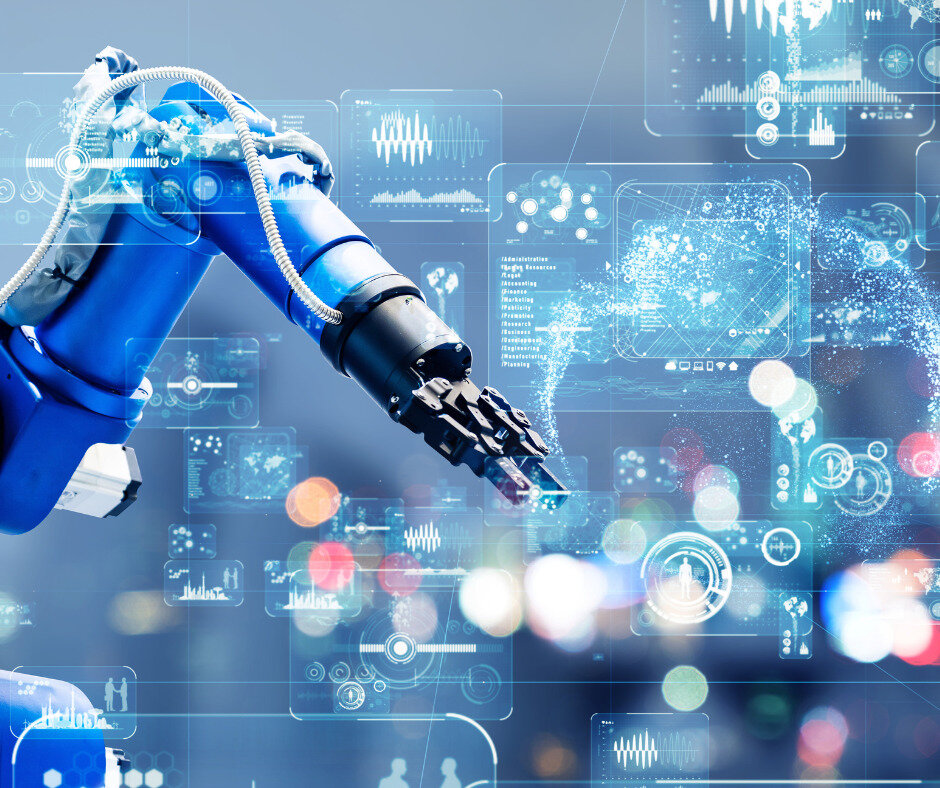
Integrating automation in FoF – Industry 4.0
EMPIR project developed software and guide to help establish digital network systems essential for the Factories of the Future
Industrial production is continuously evolving. Each change has introduced new measurement concepts and associated problems and resulted in more efficient production, lower costs and increased uptake of goods and services throughout society.
We are currently seeing the development of ‘Factories of the Future’ (FoF) – where information and communication technology (ICT) is fully integrated with automation technology, including robotics, software and artificial intelligence (AI) or machine learning (ML).
Sensors that are deployed in such applications often form networks sending data that is distributed in time as well as space –leading to deviations between different sensor clocks and misalignment of data streams – causing network ‘jitter’ and information loss.
This problem has been addressed by the now completed EMPIR project Metrology for the Factory of the Future (17IND12, Met4FoF).
Sascha Eichstädt (PTB) who coordinated the project has said:
“This project, for the first time, addressed metrological questions across the whole data lifecycle in practical Factory of the Future scenarios: from calibration of single digital sensors to the machine learning outcome based on data from the whole sensor network.”
Outputs from the project include the software below which are freely available on GitHub:
- A metrological agent-based system: agentMET4FOF
Developed by Institute for Manufacturing at the University of Cambridge (IfM), PTB and other partners it is designed to maximise the predictive accuracy of machine learning systems by pinpointing sources of uncertainty. Along with tutorials this agent-based framework has integrated web visualisation and has been shown to increase the safety and interpretability of the ML system in a cyber-physical manufacturing system. - Noise and jitter removal: Using a Bayesian mathematical approach this software produces a pre-processed signal that is an estimate of the true signal together with its associated uncertainty
- Industrial testbeds: Using Bayesian machine learning these demonstrate the practical applicability of the framework in three industrial testbeds: automated test equipment for the temperature calibration of micro electromechanical systems (MEMs) at SPEA, Italy; radial forging at the University of Strathclyde, UK; and condition monitoring, lifetime prognoses and end-of-line tests of electromechanical cylinders at ZEMA, Germany
As well as the software developed the project has recently published a good practice guide ‘Tutorial on one-touch calibration of MEMS temperature sensors’ which details methods for cost-efficient, traceable calibration of Micro Electro Mechanical Systems (MEMS) reference sensors and automated testing equipment. MEMS are microscopic devices integrating electrical and mechanical components at the nano to micro scale and are used in a range of digital applications, from biosensors to computer disk drive heads or the sensors in modern smartphones.
Along with the other project outputs this work will help facilities of National Metrology Institutes and Designated Institutes to become digital ready and enable European factories of the future to be competitive with their global counterparts.
This EMPIR project is co-funded by the European Union's Horizon 2020 research and innovation programme and the EMPIR Participating States.
Want to hear more about EURAMET?
Sign up for EURAMET newsletters and other information
Follow us on LinkedIn and Twitter
Information
- Research develops methods for machine learning in metrology for sensor networks
- Online workshop: Sensor network metrology and calibration of digital sensors
- EMPIR project supports digital transformation in industry for COVID-19 recovery
- Two EMPIR projects work together to bring measurement to the IIoT
- Workshops on Europe’s digital measurement evolution held in September 2021
- Machine learning and data analysis video tutorials available from EMPIR project
- EMPIR,
- EMN Advanced Manufacturing,
- TC-IM,
- EMN Mathematics and Statistics,
- TC-EM,

Developing a metrologically-based field assessment of glare and obtrusive light more
Standardising industrial procedures for the magnetic properties of devices leading to the improved quality of a wide variety of products more
Implementing quantum-based pressure measurement techniques in European industries more

Developing reference materials for mass spectroscopy to monitor radioactive and stable isotope pollution in the environment more

Development of the metrological network needed to realise and implement 6G technology more