integrated metrology community.

News
PlasticTrace project addresses the emerging threat of micro-and nanoplastic exposure through food
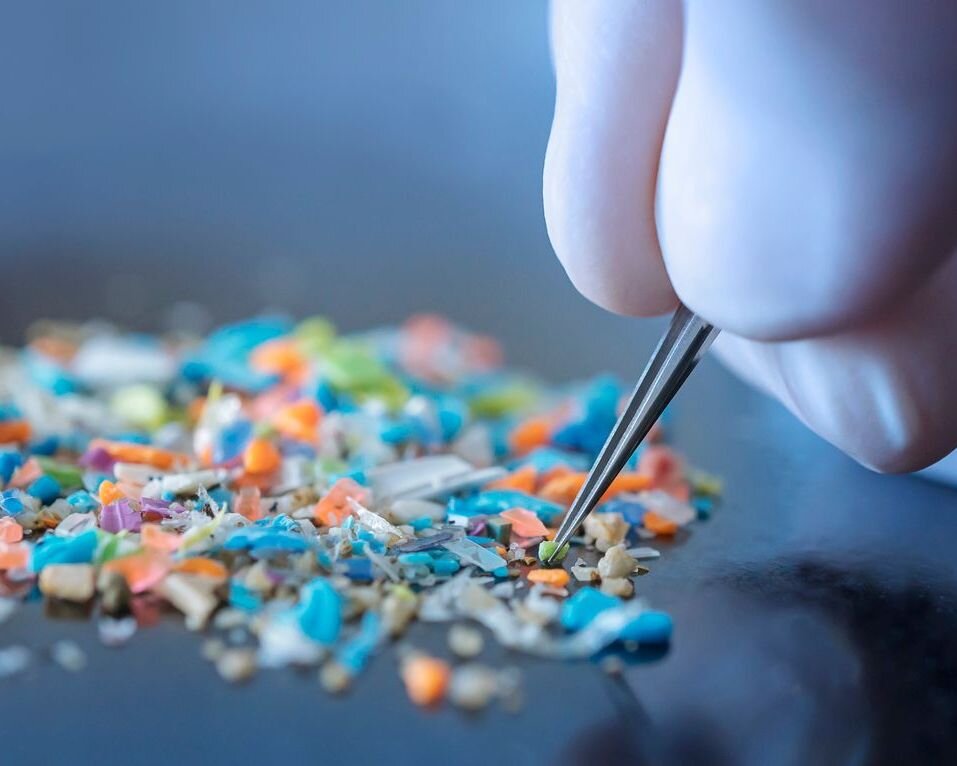
Microplastics
Creating a metrological infrastructure to measure small microplastics and nano-plastics in food and the environment
Of the 359 million tonnes of global plastic produced annually, two-thirds are released into the environment, where they undergo complex physicochemical processes, gradually degrading and fragmenting. Larger plastic pieces fragment into small microplastics (SMPs, 0.1 µm–5 mm), and eventually into nanoplastics (NPs, 1-100 nm). These particles accumulate in water, soil and living organisms, crossing biological barriers and posing potential risks to human health. Recognising this challenge, The EU Plastics Strategy has identified reducing microplastic release as a key priority for fulfilling the European Commission’s circular economy action plan.
The Metrology Partnership project Metrological traceability of measurement data from nano- to small-microplastics for a greener environment and food safety (21GRD07, PlasticTrace) is working to create and validate methods to measure and characterise SMP/NPs in food and environmental matrices, including composition, size distribution and morphology. To able to do this, fit for purpose reference materials are being produced and validated.
Project outputs so far include:
- Developed reference materials containing SMPs of polyethylene terephthalate (PET, 10-100 µm) with low mass concentrations and low particle numbers in the form as water-soluble tablets. These tablets have been accurately characterised for mass and particle numbers, demonstrating good homogeneity and stability.
- Developed nanoplastics reference material in the form of suspensions which were characterised for homogeneity and stability. The reference materials contain polyethylene (PE) or polypropylene (PP) particles with a broad size distribution < 1 µm and well-defined particle numbers.
- Transferred new knowledge and materials to ISO/TC 147/SC 2/JWG 1 by supporting the inter laboratory comparison trial for the validation of ISO 16094-2 standard Water quality — Analysis of microplastics in water – Part 2: vibrational spectroscopy methods for waters with low content of suspended solids including drinking water. PET Tablets produced in the project were selected as reference materials by the ILC Organising Committee for the validation of the present methodology and distributed to the selected participants worldwide.
- Finalised the recordings for the production and publication of its first e-learning modules, covering topics such as ‘Basic Requirements and Quality Control’, ‘Preparation of Reference Material’, and ‘Application of µRaman’. These modules focus on small microplastics and nanoplastics and are intended for students, laboratory technicians, and research staff. The eLearning modules will be available online.
- Joined several EU projects’ meetings, such as with EUROqCHARM and COST Action PRIORITY on nano and microplastic standardisations. The project has joined special sessions with the NORMAN network and with PlasticsFatE together with the CUSP network of EU project on human health facilitated discussions on various aspects of plastic pollution, covering topics such as analytics, toxicology, design, labelling and European harmonisation.
The work of this project will enable the traceable monitoring of small microplastics and nano-plastics, and support decision-making and mitigation measures around plastic pollution. It will also support future technologies, such as biodegradable bioplastics, and improvements to the health impacts of industries such as food packaging and water management.
Project coordinator Andrea Mario Giovannozzi from INRIM said
‘The success of PlasticTrace lies in its ability to connect scientific innovation with regulatory needs. By delivering high-quality reference materials and robust, traceable measurement methods for micro- and nanoplastics, the project provides essential tools to advance environmental protection, ensure food safety, and support evidence-based decision-making in tackling plastic pollution’.
This Metrology Partnership project has received funding from the European Partnership on Metrology, co-financed by the European Union Horizon Europe Research and Innovation Programme and from the Participating States.
Want to hear more about EURAMET?
Information
- European Partnership on Metrology,
- Green Deal,
- EMN Pollution Monitoring,
- EMN Safe and Sustainable Food,

Developing a metrologically-based field assessment of glare and obtrusive light more

Standardising industrial procedures for the magnetic properties of devices leading to the improved quality of a wide variety of products more
Implementing quantum-based pressure measurement techniques in European industries more

Developing reference materials for mass spectroscopy to monitor radioactive and stable isotope pollution in the environment more

Development of the metrological network needed to realise and implement 6G technology more